Taimid

ABOUT
TAIMID Ireland, "We Are Ireland", is a coalition of Independents, rather than a conventional political party that was developed in 2024 as a response to the 70% Irish Voters concerns over non-Christian polices being pushed through Government.
Our governing principle is simple, every policy is cross checked to ensure compliance with Ireland's Catholic Constitution "The Most Holy Trinity" and run with the discipline of a well-managed business, where costs are controlled, results are delivered on time, and every euro of public money is accounted for in the open.
We stand firm on Irish sovereignty, Ireland's Christian constitution and the 1916 Proclamation opposing the steady transfer of national decisions to non-elected bodies in Brussels, Geneva and beyond.
Consider where that transfer has left us in August 2026: a record high number of 17,482 people in emergency accommodation, the most expensive household electricity in the entire European Union, a fishing fleet cut to a fraction of its quota, and a state that collected €105.7 billion in tax last year while families struggle with every bill.
Ireland is not short of money, talent or ambition.
It is short of Irish approach management.
TAIMID is to supply exactly that: transparent, accountable, efficient governance that treats every Irish citizen as the shareholder of their own country.
Ireland deserves stronger results.
Proverbs 29:2
"When the just are in authority, the people shall rejoice."


TAIMID GOVERMENT POLICYS
Christian & Sovereign

An Bille um Rialú Imlíne na hÉireann — Irish Immigration Control Act
The Dáil alone possesses the authority to legislate for Ireland, as the 1916 Proclamation declared. The International Protection Act 2026, commenced on 12 June, instead binds our asylum system to the EU Migration and Asylum Pact, with screening rules and deadlines designed in Brussels. TAIMID would restore full national control. We introduce an electronic entry visa for all arrivals, including EU nationals, verified by Garda officers at the border. This requires amending the European Communities (Free Movement of Persons) Regulations 2006 and renegotiating Directive 2004/38/EC, and we say so plainly rather than pretending otherwise. Any non-national convicted of a crime loses that visa immediately and leaves the State within ten days, building on the current deportation programme that issued more than 4,400 orders last year. The financial case is as strong as the sovereign one. Roughly 33,250 people remain in State-funded accommodation, and international protection spending runs to hundreds of millions annually — money that could house Irish families on our own waiting lists. Proper border control is not hostility; every legal resident and visitor remains fully welcome. It is simply the orderly management that citizens of every other serious country take for granted. The era of unvetted entry ends.
Nehemiah 4:9
"We set a watch day and night."

An Bille um Laghdú Cáin Bhreisluacha — Value Added Tax Reduction Act
Ireland's standard VAT rate remains 23%, among the very highest in Europe, while consumer prices rose another 3.4% in the year to June 2026. July's reduction to 9% was welcome but reached only restaurants, catering and hairdressing. TAIMID cuts the standard rate for everything else from 23% to 12%, leaving zero-rated healthcare, education, and children's essentials untouched. What does that mean at the till? Roughly €9 back in every €100 you currently spend on standard-rated goods and services. A household spending €15,000 a year on such items — clothing, furniture, appliances, repairs, fuel for the car — keeps approximately €1,340 of it. A family renovating a home or replacing a boiler saves hundreds more in a single transaction. Small businesses gain twice: customers with restored spending power, and one simplified quarterly return instead of today's compliance burden. Can Ireland afford it? The State collected €32.9 billion in corporation tax and €22.9 billion in VAT last year, and still recorded a €3.8 billion underlying surplus. The money already exists, in surplus, right now. The question is whether it belongs to the households and small firms who generate it, or to the permanent expansion of the State. TAIMID's answer is always the household.
1 Kings 12:4
"Lighten the hard woek, and we will serve."

Bunreacht na hÉireann — The Constitution of Ireland
Our Constitution opens in the name of the Most Holy Trinity and humbly acknowledges our obligations to Our Divine Lord, Jesus Christ, Who sustained our fathers through centuries of trial. TAIMID governs inside that text, not around it. Article 5 declares that Ireland is a sovereign, independent, democratic state, and we will defend that Article against every quiet transfer of authority to institutions no Irish citizen ever elected. The Constitution is not an obstacle for lawyers to manage; it is the standing instruction of the Irish people to their government, and it can be changed by the people alone, through referendum, never by treaty footnote or ministerial order. Under its protection, all races, religions and creeds are fully respected and remain free to express their traditions within Ireland's legal framework — that pluralism is itself a constitutional command we uphold without reservation. , TAIMID will ensure the Irish government acts decisively to defend that citizen's fundamental rights. Every policy on this page is measured against one test first: does it honour the Constitution?
Proverbs 22:28
"Do not remove the ancient landmark that the fathers have set."
An Bille um Rialú Imlíne na hÉireann
(Irish Immigration Control Act)

Acht Tacaíochta Garda Síochána — Garda Síochána Support Act
An Garda Síochána today stands at 14,733 sworn members, with 604 trainees in Templemore and a record €2.74 billion budget. Yet communities still wait for a patrol car, because sworn members sit behind desks doing clerical work a civilian could do at a fraction of the cost. TAIMID appoints Civil Clerks, exactly as the courts already employ, releasing thousands of Garda hours back to the street — the cheapest expansion of visible policing available to any government, delivered within six months, not after years of committee hearings and consultant reports. Recognising the genuine dangers members now face, we authorise sidearms for 50% of Gardaí with mandatory, recurring training, reducing costly reliance on the Emergency Response Unit across all thirty-two counties. Garda immigration functions merge with Border Management, with specialist training for the swift removal of illegal entrants, so enforcement is one seamless system rather than three departments passing files. The restriction preventing serving members from seeking political office will be reviewed: three decades of real policing experience belongs in the Dáil chamber, not outside it. Every euro of that €2.74 billion will be published, itemised and defended in public. .
Romans 13:4
"Not the sword in vain."

Acht um Athchóiriú Údarás Áitiúil agus Caomhnú — Local Authority Reform and Heritage Act
Planning in Ireland is a postcode lottery: identical applications meet different standards, different timelines and different fees depending on which county office opens the envelope. That inconsistency costs builders money and it costs buyers homes. TAIMID reforms local authorities to apply one national planning standard with statutory decision deadlines, using the Planning and Development Act 2024 — whose provisions on conservation strategies, Architectural Conservation Areas, national monuments and demolition control we will enforce consistently rather than selectively. Faster decisions cut holding costs that developers currently pass straight into house prices, savings measured in thousands of euro per completed home. Heritage is protected, not sacrificed, in the process: Dublin's Georgian and Victorian streetscapes are national assets that draw millions of visitors, and new development in designated areas must respect the historic line and materials. Restoration of protected structures is incentivised through the Built Heritage Investment Scheme, turning derelict upper floors back into homes and shopfronts back into businesses.
Town centres are rebuilt for the people who live in them: parking that works, social zones, dog parks and continuous, even footpaths. Every council publishes an annual heritage and planning reports.
Jeremiah 6:16
"Ask for the old paths to walk there in."

An Bille um Athbheochan Iascaireachta na hÉireann — Irish Fisheries Revival Act
December's EU Council stripped roughly 57,000 tonnes from Irish quotas for 2026: blue whiting down 41%, boarfish down 22%, and a proposed 70% mackerel cut softened only in March to a 48% reduction, near 18,800 tonnes.
The Hague Preferences — the safeguard designed for exactly this moment — were blocked by the Netherlands, Germany, France and Poland. The cost is concrete: about €105 million in lost quota value, an estimated €200 million across the wider economy, and 2,300 coastal jobs in immediate danger, from Killybegs to Castletownbere to the family boats of Skerries. This is what forty years inside the Common Fisheries Policy has delivered to the EU's richest fishing grounds. TAIMID restricts fishing in Irish waters to vessels registered under Section 10 of the Sea-Fisheries and Maritime Jurisdiction Act 2006, reopens Article 10 of Regulation (EU) 1380/2013, and ties every licence to local employment and landing obligations, so the value of Irish fish is processed, sold and taxed in Irish towns.
Stock replenishment is enforced scientifically, because a revived industry needs living, abundant seas to fish for the next hundred years. Annual public reports track jobs, landings and earnings.
Our coastal communities are not an acceptable loss in anyone's negotiation.
Luke 5:4
"Launch out into the deep, and let down your nets."

An Bille um Rochtain Tithíochta Céaduaire — Irish First Access Housing Act
First Access Housing puts Irish citizens at the front of the queue for Irish homes. We introduce a 93% mortgage for first-time buyers, including families who lost homes in the 2008 crash or the Covid years and deserve a second chance. On a €350,000 home, the required deposit falls from €35,000 to €24,500 — €10,500 less standing between a working family and their own front door, years of saving returned to them at a stroke. For renters, we amend the Residential Tenancies Act 2004 to cap landlord profit at 20% above assessed costs: tenants gain predictable rents in a market where new tenancies now routinely exceed €2,000 monthly in our cities, while honest landlords keep a fair, protected, bankable return that encourages them to stay in the market rather than sell up. To protect local buyers from institutional competition, non-citizens will be limited to owning two residential properties. We state openly that this measure must be tested against EU law and may ultimately require a referendum — and we will make that argument to the Irish people without apology. Housing is the foundation of family life and of the nation itself. Homes exist to be lived in, not warehoused as portfolios.
Isaiah 65:21
"They shall build houses, and live in them."

An Bille um Beatha ag an gCoincheap — Irish Life at Conception Act
Ireland recorded 10,600 terminations in 2025 — approximately 65,000 since the 2018 Act took effect — and roughly one pregnancy in six now ends in abortion.
TAIMID believes a country that loses a small town's population every three years to abortion must, at the very minimum, be completely honest with itself about what is happening. We recognise life at conception. Published research, including studies from the National Institutes of Health, identifies the zinc spark released within minutes of fertilisation as the observable beginning of embryonic development: a distinct human life, with its own complete genetic identity, begins there. From that moment, TAIMID holds, a legal person exists, entitled to the protection of Irish law, and we will use the authority of the Oireachtas to define personhood accordingly and prohibit abortion. But prohibition alone is not a policy, and we do not pretend it is.
We pair it with the strongest maternal support package in the State's history: priority housing access for expectant mothers, direct income support through pregnancy and early years, free childcare under our Family Support Act, and reformed, compassionate adoption pathways.
A mother facing crisis should meet a country offering everything except abandonment.
That is a Christian governance in practice.
Isaiah 66:9
"Am i to open the womb and not birth ? "

An Bille um Dheimhniú Bóthair na hÉireann — Irish Road Certificate Act
Irish motorists currently manage road tax, insurance and compliance through three separate systems, each with its own administration, penalties and paperwork — and every layer of duplication ends up directly on the driver's bill. TAIMID repeals the Motor Vehicle (Duties and Licences) Act 2015 and amends Section 56 of the Road Traffic Act 1961 to create one consolidated Road Certificate: a single annual payment covering road tax, guaranteed third-party liability cover and roadworthiness compliance. One single document, one single renewal date, one clear price — with the administrative savings of consolidation returned to motorists rather than absorbed by the system, and the certificate fund directly financing road maintenance and accident liability. Uninsured driving, which currently adds an estimated €30 to €35 to every honest policy through the compensation levy, is designed out of existence: if the vehicle is certified, it is covered.
Routine traffic enforcement moves from congested courtrooms to automated, camera-based fines issued by An Garda Síochána under amended 1997 regulations, with robust safeguards for accuracy and a clear appeal path — freeing court time for serious offences. Year-based registration plates are replaced with randomised numbers.
Numbers 20:17
"We will go along by the king's highway."

An Bille um Thacaíocht do Dhaoine gan Dídean — Homelessness Support Act
In June 2026, 17,482 men, women and children were living in emergency accommodation — including a record 5,620 children spending their summer holidays without a home — after April set an all-time record of 17,548. The past twelve months alone brought a 9.8% increase in that number. Behind the statistics stands a simple national disgrace: the State runs multi-billion-euro surpluses while Irish children grow up in hotel rooms. TAIMID's position is absolute: no Irish citizen goes without a bed, three meals and clean clothing. We use the legal machinery that already exists — the Housing Act 1988, the Housing (Miscellaneous Provisions) Act 2009 and the Social Welfare Consolidation Act 2005 — but we make delivery mandatory on every local authority, funded through direct gift-card provision for food and clothing, reported publicly every quarter, with financial penalties for councils that fail. Prevention leads here, because it is both humane and cheaper: early intervention on rent arrears costs a fraction of the roughly €30,000-plus that a year of emergency accommodation can consume per family, money that currently maintains homelessness rather than ending it. Paired with our First Access and Fast-Track Housing Acts, the pathway runs from crisis to council support to a permanent front door.
Isaiah 58:7
"Bring the needy and the harbourless into the house."

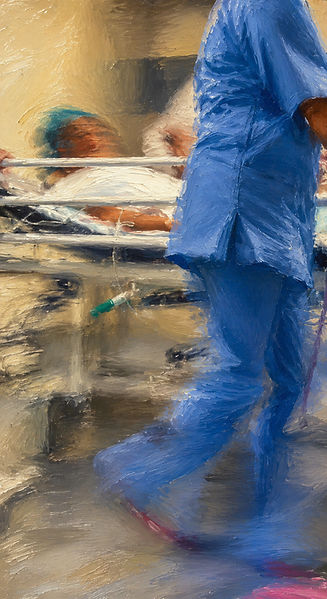
An Bille um Ionad Leighis Neamhbhaol — Non-Life-Threatening Medical Centre Act
Ireland's three main hospital waiting lists grew by 72,180 patients in the first half of 2026 alone, while almost 24,500 appointments and operations were cancelled in January. Emergency departments absorb an extra 700 attendances daily — many of them cases that never required a hospital at all. TAIMID breaks the bottleneck at its actual source. We establish 24/7 walk-in medical centres in every major Irish town, providing GP, dental and urgent care without appointment, amending the Health Act 1970 to widen eligibility for free and subsidised treatment and the Health Act 2004 to enable direct HSE funding with public consultation. For households, the saving is immediate and visible: a €60-plus out-of-hours GP fee, the day's lost wages spent waiting on a trolley, and the private clinic bills families pay in desperation are replaced by local care that is genuinely nearby, properly staffed and permanently open. For the taxpayer, treating minor conditions in a local centre costs a fraction of an emergency department presentation. HIQA oversight continues in full under the Health Act 2007, and the Equal Status Acts guarantee non-discriminatory access. Treatment requires consent: we review the Mental Health Act 2001 to end involuntary admission and guarantee full patient autonomy.
Luke 10:34
"He bound up his wounds, and took care of him."
An Bille um Chosaint Fostaíochta — Irish Employment Protection Act
Every Irish job lost to automation is a family income lost, a mortgage at risk, and income tax revenue gone from the State that funds every service on this page. TAIMID does not oppose technology; we oppose its use as a quiet instrument of mass redundancy. Under our Act, any company deploying artificial intelligence at scale must demonstrate to the Workplace Relations Commission — under the Workplace Relations Act 2015, alongside the Employment Equality Acts 1998–2015 and the National Minimum Wage Act 2000 — that the technology augments its workforce rather than replacing it. Displacement without a funded retraining and redeployment plan will simply not be approved. The economics are plain: a worker earning €45,000 contributes roughly €10,000 annually in income tax and USC; an algorithm contributes nothing, while the displaced worker draws support instead. Protecting Irish employment is therefore sound fiscal policy, not mere sentiment.
The same Act strengthens protection for Irish children online, building on the Online Safety and Media Regulation Act 2022: strict age verification and content standards, enforced by Coimisiún na Meán with real penalties, so the digital economy we regulate is one our families can safely inhabit. Technology must serve Irish workers — never silently liquidate them.
Luke 10:7
"The labourer is worth his employment."

An Bille um Réiteach Tithíochta — Irish Housing Solution Act
Ireland completed a record 36,284 homes in 2025 — still short of the abandoned 41,000 target — and 7,856 more in the first quarter of 2026. Meanwhile roughly 32,000 homes with full planning permission sit unbuilt, strangled by approval delays and missing water infrastructure. Every year of delay adds holding costs, levies and financing charges that flow directly into the price a young couple eventually pays: industry estimates put avoidable process costs in the tens of thousands per unit. TAIMID attacks the blockage, not the symptom. We simplify Sections 32 and 125 of the Planning and Development Act 2000, expand the Affordable Housing Act 2021 beyond its current narrow reach, and amend Section 97 of the Water Services Act 2007 so that water and wastewater capacity is built ahead of demand instead of being the reason estates are refused. Uisce Éireann's €1.4 billion 2026 allocation must connect homes, not fund reports. The objective is supply that outruns demand until prices and rents fall in real terms — because no subsidy scheme ever devised can survive a genuine housing shortage.
Families gain private capital and stability; renters gain falling rents and the State stops competing against its own citizens.
Practical capital solution, not more socialism queues.
Psalm 127:1
"Unless the Lord build the house, they labour in vain."

An Bille um Thacaíocht Teaghlaigh — Irish Family Support Act
Full-day childcare in Ireland averages €197 per week — over €10,000 a year per child — and capped fees still reach €295 weekly. The National Childcare Scheme refunds €2.14 per hour, but only after parents find the money upfront, and the Government's own plan admits fees will not approach €200 monthly before the end of the decade. TAIMID replaces the subsidy maze with free childcare for working parents, paid directly to Tusla-registered providers, with eligibility verified instantly through MyGovID. What a family keeps is transformative: at average fees, approximately €5,200 per child every year beyond today's universal subsidy; a family paying capped maximum fees keeps over €10,000 per child. For a two-child household, that is the equivalent of a €20,000 gross pay rise — without either parent changing jobs, adding hours or chasing promotion. The mother who currently calculates that her entire salary disappears into fees can return to work from day one, restoring her career, her pension contributions and her family's second income, while the Exchequer recovers much of the cost through the income tax her employment generates.
The free ECCE preschool years continue unchanged alongside. Strong, stable families are the first institution of the State; we fund them like it.
Psalm 127:3
"Behold the inheritance of the Lord are the children."

An Bille um Fhorbairt Tithíochta Fast-Track — Irish Fast-Track Housing Development Act
Ireland has committed to 300,000 new homes by end-2030 and is not on course to deliver them: 36,284 completions in 2025 fell short even of the first year's abandoned target.
TAIMID's answer is a statutory fast-track consent route for private developers who commit to binding delivery timelines, with infrastructure obligations agreed at approval rather than litigated for years afterwards.
The bargain is explicit, enforceable and fair. Builders receive speed and certainty — the two things that cut their financing costs most, savings that competition passes into sale prices. In return, every fast-tracked scheme allocates an agreed percentage of completed homes to the State at cost price for public use, delivering social and affordable housing at builder's cost instead of the inflated turnkey prices councils currently pay — a saving to taxpayers that can reach six figures per acquired unit. Permission that is hoarded is forfeited: land zoned, serviced and approved must be built or surrendered. First-time buyers receive priority access on completion, aligning with our 93% First Access mortgage.
This dismantles the slow, expensive state-led model and replaces it with supervised private speed, blending initiative with social responsibility until national supply finally meets national demand and house prices genuinely, measurably fall.
Nehemiah 2:18
"Let us rise up and build."

An Bille um Thacaíocht Feirmeoireachta — Irish Farming Support Act
From 1 May 2026 the carbon tax reached €71 per tonne on green diesel, adding roughly 2.5 cent per litre on top of years of accumulated increases, while Irish white diesel prices sit persistently near the top of the European table. A tillage or livestock operation burning 20,000 litres of marked gas oil annually now hands the State hundreds of euro per year in carbon tax alone — before a single animal is sold or a single acre is harvested. TAIMID restores genuinely competitive green diesel for commercial agricultural use and commits to driving Irish farm fuel costs toward the lowest in Europe. We legislate a four-year zero-tax period on farming businesses, letting family farms rebuild reserves, reinvest in stock and machinery, and pass viable enterprises to the next generation instead of selling to the highest bidder. We pursue tariffs on non-EU food imports that undercut Irish and European producers — Brazilian beef, Canadian potatoes — restoring the original promise of the common market, because the Agricultural and Food Supply Chain Act 2023 polices trading practices inside the EU while leaving that outer flank wide open. Food security is national security. Irish family farms are strategic infrastructure; TAIMID funds them precisely accordingly.
Psalm 104:14
"Producing grain from the earth, and wine to bring joy to their hearts."

An Bille um Chosaint Beatha — Irish Life Protection Act
The Voluntary Assisted Dying Bill 2024 lapsed with the dissolution of the last Dáil and must be reintroduced to proceed.
TAIMID will oppose its return in any form.
The existing law of this State is no accident but settled moral judgment: assisting a suicide carries up to fourteen years' imprisonment under the Criminal Law (Suicide) Act 1993, and the deliberate ending of another's life is murder under Section 4 of the Criminal Justice Act 1964. Article 40.3 of the Constitution commits the State to protect the right to life, reinforced by Article 2 of the European Convention on Human Rights.
The accumulating international evidence urges caution upon Ireland, not imitation: jurisdictions that legalised assisted dying have watched eligibility widen steadily beyond the terminal cases first promised, while Scotland's parliament examined precisely such a bill and rejected it in March 2026.
Misdiagnosis is a documented clinical reality, and a wrong prognosis inside such a regime is not a tragedy — it is an irreversible killing sanctioned by the State.
TAIMIDS answer is better care, not earlier death: properly funded palliative medicine, hospice capacity in every county, and home-care support that lets people die with genuine dignity, surrounded by family, in comfort with respect.
Exodus 20:13
"You shall not kill."
Manufactured Denial of Service — M.D.O.S. Business Protection Act
When coordinated campaigns set out to destroy a lawful Irish business or block strategic investment, the jobs lost are real, the wages lost are real, the tax revenue lost is real, and the chilling message to the next investor is very real — yet no Irish statute names the offence. The Consumer Protection Act 2007 addresses unfair commercial practices; the Competition Act 2002 addresses anti-competitive conduct; the Criminal Justice (Corruption Offences) Act 2018 addresses bribery; the Unfair Dismissals Act 1977 protects individual employees. Organised economic sabotage of legitimate projects falls between every one of them.
TAIMID closes the gap with a defined offence of Manufactured Denial of Service: the deliberate, coordinated obstruction of lawful enterprise contrary to the national economic interest, carrying fines of up to €7 million, imprisonment of up to seven years, or both. We are equally clear about what this law does not touch. Peaceful protest, boycott, journalism, whistleblowing and genuine environmental objection remain fully protected — the offence requires proven coordination, deliberate falsehood or unlawful obstruction, tested before a judge to the criminal standard. A country competing for global investment surpluses cannot allow orchestrated sabotage.
Deuteronomy 16:20
"They shall go to the judges, and the judges shall decide."

An Bille um Phunt na hÉireann — Irish Punt Act
Inspired by the 1916 Proclamation's pledge of sovereignty and prosperity, TAIMID proposes reintroducing the Irish Punt as a gold-backed national currency circulating alongside the euro. The purpose of this measure is economic resilience for Irish savers, not nostalgia. The 2008 collapse showed how completely Irish savers depend on decisions taken in Frankfurt; a gold-backed domestic currency gives households and businesses a store of value that no foreign central bank can inflate away, while the euro remains fully in use for trade, travel and daily commerce. Poland and Switzerland demonstrate every day that a national currency and euro acceptance coexist without isolation or penalty. We are honest about the scale of the task. The Currency Act 1927 created the Punt; the Central Bank Act 1942 binds our Central Bank to ECB policy; Article 3 of the TFEU and the Maastricht Treaty designate the euro as sole legal tender. Reintroduction therefore requires amended domestic legislation, negotiated treaty change, and ultimately a constitutional referendum — placing the final decision exactly where it belongs: with the sovereign Irish people alone. No other party will even discuss monetary sovereignty. TAIMID believes a nation that cannot discuss its own currency has already surrendered more than money.
Proverbs 11:1
"A false balance is an abomination to the Lord."

An Bille um Fhuinneamh Núicléach — Irish Nuclear Energy Act
Irish households pay the highest electricity prices in the European Union — roughly 40 cent per kilowatt-hour, about 40% above the EU average, which drains approximately €480 more from each home every year than the average European pays. It worsened again in July 2026 when Electric Ireland raised prices 8%, adding about €138 to a typical annual bill, with network charges up €101 per household besides.
TAIMID ends the policy causes of this burden. We repeal the 1999 nuclear prohibition and commission an underground programme of 2 to 3 gigawatts of advanced small modular reactors — clean, carbon-free baseload power that ends blackout warnings and gas import dependence permanently.
We abolish the carbon tax for households, currently €71 per tonne and adding roughly €154 a year to average gas heating alone, and we abolish the PSO levy, returning a further €24 annually. Closing even the gap to the EU average returns that €480 to every household, every year — before nuclear baseload pushes costs lower still.
For a Galway bakery or a Kilkenny factory, the same arithmetic protects jobs measured in the thousands. Cheap, reliable, sovereign Irish power for families, farms, pensioners and industry.
That is energy policy run like a business.
Genesis 1:3
"And God said: Be light made. And light was made."

An tAcht um Shlándáil Fuinnimh Náisiúnta — National Energy Security and Employment Act
Ireland imports the fuels that set its electricity price while proven and prospective resources sit undeveloped at Barryroe, Inishkea, Spanish Point, Lough Allen and across our offshore basins. Every winter of import dependence is money leaving the country — billions annually spent buying energy from abroad that Irish workers could produce at home under stricter environmental supervision than any exporter we currently pay. TAIMID reopens oil and gas exploration and development licensing, subject to rigorous environmental standards, fully transparent regulation and a defined national benefit test on every licence. The employment guarantee is written into law, not left to press releases: at least 50% of the workforce across exploration, development, construction and operational phases must be ordinarily resident in Ireland, with the same requirement extending to apprenticeships, technical training programmes and supply-chain contracts for Irish businesses wherever practical. For coastal and rural regions, that means thousands of well-paid, long-term jobs, and for every household it means downward pressure on the imported-gas prices that currently set Irish electricity costs. Domestic supply also hardens Ireland against the supply shocks that repeatedly spike
European markets. Energy security is, quite simply, national security.
Deuteronomy 8:9
"A land whose stones are iron, and out of its hills brass."

An Bille um Aer Glan — The Clean Air and Carroll Forestry Programme
Ireland taxes families €71 per tonne for carbon while missing its own afforestation targets year after year — punishing households for emissions the State itself fails to offset. The Carroll Forestry Programme inverts that expensive failure into guaranteed rural income. Landowners and farmers receive €10,000 annually to plant and maintain 1,000 trees, paid on verified survival and growth, not on paperwork.
For a farm family, that is a five-figure guaranteed income stream from marginal land, fully compatible with existing grazing and stock shelter. Every ten years, at maturity, the forest may be harvested and sold — commercial timber routinely worth tens of thousands per hectare — with supported replanting so the cycle, the carbon capture and the income all compound across generations.
The environmental return is measured, not modelled: growing trees filter CO2 and carbon monoxide and release oxygen, directly offsetting livestock emissions where they occur, while restoring biodiversity and building a native timber industry in a country that currently imports most of its construction wood.
This is climate policy a farmer can bank and a citizen can see from the road — real trees in Irish soil, outperforming the paper credits, foreign offsets and household levies that change nothing measurable at all.

DAVID CARROLL
I bring thirty years of expertise in construction, manufacturing, international trade and finance to the management of this country — and not one day of career politics.
My view is. Ireland is not short of money: the State collected €105.7 billion last year and still ran a surplus while your bills rose. Ireland is not short of talent or ambition either. It is short of honest, disciplined management. In business, you know what things cost, you refuse to pay twice, you publish the result whether it flatters you or not, and you answer personally for the outcome. I will bring exactly that discipline to government: low costs, full transparency, and sovereignty over every decision that shapes Irish lives. I will not ask any citizen to accept an answer I would reject as a businessman, and I will not hide a single figure from the people who paid for it.
Accountability starts right at the top, with me. Join us, and help build a prosperous, safe, self-reliant Ireland that is true to itself.


MARK
HUGHES
Mark remains semi-private until his current professional project concludes, at which point he will publicly join TAIMID. He brings extensive expertise in accounting and business financial control to the hardest problem in Irish government: knowing precisely where €109.4 billion of annual public expenditure actually goes. His remit is total, permanent visibility. Every department, every agency and every significant contract reported openly — spending published as it happens, variances flagged while overruns can still be stopped, not discovered years later in a tribunal. The prize for taxpayers is enormous: even a 2% efficiency gain on current expenditure exceeds €2 billion a year, roughly the yield of the entire carbon tax and PSO levy combined — savings recovered from waste rather than extracted from households. Mark's private-sector discipline treats every euro as what it is: money earned by an Irish worker, entrusted to the State, and owed an account. Taxpayers are the shareholders of this country, and shareholders receive audited accounts, on time, in plain language.


AOIFE CONNOR
Aoife joins TAIMID as our Department of Health Representative, focused on the part of the system patients actually experience: the waiting time, the staffing level, and the condition of the building they walk into. The scale of the failure is public record — waiting lists up 72,180 in the first half of 2026, tens of thousands of appointments cancelled, families paying out of pocket for scans and consultations the public system promised them.
Aoife's advocacy is practical: shorter waiting times through the 24/7 local medical centres in our Non-Life-Threatening Medical Centre Act, modern hospital infrastructure, serious mental health provision built on consent, and sustained investment in the clinicians who deliver care rather than the administration that surrounds them. Her working method is clinical evidence first, published outcomes always, and genuine collaboration between medical professionals and the communities they serve. Ireland spends among the most per head on health in Europe.